
WHY QEP EXISTS
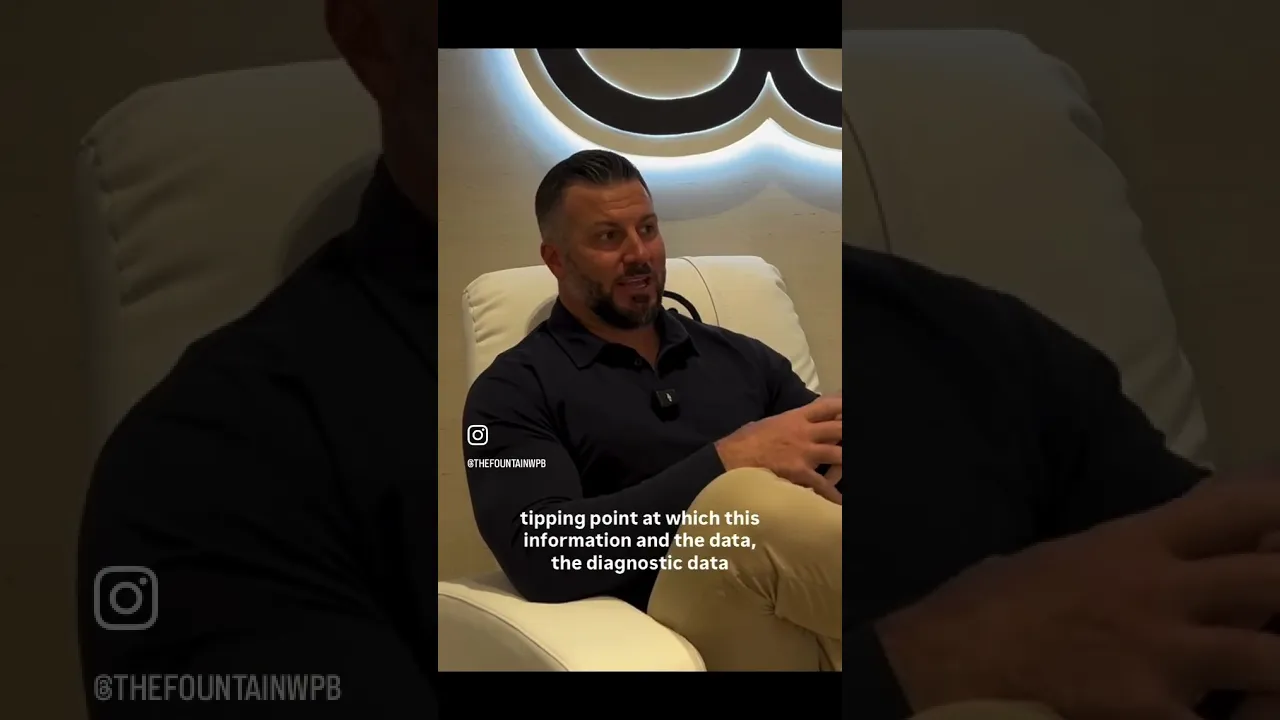
QEP was born from watching capable, disciplined people take their health seriously, go deeper than most, only to be met with mountains of diagnostic data and endless conflicting second opinions.
We give leaders something rare: peace of mind - knowing their long-term health is being handled properly.The people who seek us are serious about their health, but they are exhausted by mountains of data, by conflicting expert opinions, and by being responsible for connecting health decisions that no one else is coordinating.That’s where the Quantum Executive Protocol steps in.QEP brings together world-class diagnostics, advanced performance and longevity therapeutics, and something that hasn’t existed in this space before:
a cross-domain and longitudinal decision-governance system designed for three specific things - to mitigate health risk, increase longevity, and optimize performance as life scales.
No more self-negotiating.
No more fragmented recommendations.
No more stressing about which data actually matters.Just clarity, structure, and decisions that compound.This short video explains the issue our clients kept facing and why QEP had to exist to address it.
WHERE HEALTH OPTIMIZATION BREAKS
Most people begin with snapshots:
Annual labs, basic bloodwork, then reactive follow-up when something raises a red flag.This works when health decisions are simple and symptoms are obvious.
The limitation:
Snapshots only show moments - not direction. They don’t reveal trajectory, early risk, or whether small changes are accumulating in a meaningful way.Effectively, this is a reactive approach to "preventive medicine".
Serious people go deeper.
Genetic tests to understand predisposition.
Biological age to assess pace and direction.
Advanced bloodwork to see beyond standard ranges.
Full-body MRI to surface structural risk before symptoms force the issue.At this level, health stops being reactive and it becomes proactive, strategic, intentional.
Very few clinics bring this depth together - because once you do, you inherit a new responsibility: making sense of the endless data.
Depth creates clarity, but thousands of cross-domain data points ALSO creates complexity.More signal, more findings, more health domains, more possible actions.At a certain point, the problem is no longer access to more diagnostics or more second opinions. It’s knowing what data actually matters now and what doesn’t - what findings should be addressed immediately, what can wait, and what should be left alone entirely.
This is the point most systems approach failure.
Recommendations stack up.
Decisions begin to interact.
Timing becomes less obvious.
Interventions in one domain start to influence outcomes in another.Without structure, optimization becomes incremental and eventually fragile.Every model breaks at a certain level.Once health decisions multiply and stretch across time, optimization without governance starts to fail - even when the tools are advanced and intentions are good.
Beyond that break point is where QEP exists.
WHAT QEP ACTUALLY IS
QEP is an elite performance, longevity, and health risk management program built on advanced diagnostics, physician-led interpretation, and access to a very high level of care.That’s the foundation.
What makes QEP different is what sits on top of it.QEP adds a governing system to health decisions. It's a logic framework designed to preserve clarity as diagnostics deepen, expert opinions multiply, and interventions begin to stack up.
Because once optimization goes far enough, the problem is no longer access to information.The problem is deciding what actually matters.Not everything that can be done should be done.
Not every abnormal data point requires action.
Not every intervention improves the condition, especially when timing is wrong.QEP exists to make those distinctions deliberately, not reactively.It provides a way to decide:
what matters now
what should be monitored
what should be deferred
and what should be left alone entirely
All within the context of the whole biological system - not in isolation.The primary goal of QEP is patient relief from decision burden, durable performance, preserved optionality, and long-term resilience.
The governance system within QEP is not a tracking or recommendation tool.It’s a control-first clinical logic system. We classify control status before optimizing, bind long-term health constraints that shape future decision making, and explicitly govern activation, deferral, and escalation with defined thresholds. It prevents drift and over-optimization while preserving long-term trajectory and ultimately created a prioritized and sequenced approach to managing long-term health.
WHO QEP IS FOR
QEP tends to resonate with executives and leaders.Founders. CEOs. Partners. Principals. Operators.
People whose decisions affect employees, capital, families, and outcomes.What they’ve noticed is that execution gets harder as life scales.
QEP isn’t for casual wellness consumers, short-term fixes, or people looking for biohacking without accountability.It’s for people who plan to keep operating at the highest level possible and want a system that can truly support that over the long term.
HOW ENAGEMENT WORKS
QEP is intentionally limited.Each engagement begins with a comprehensive diagnostic foundation and physician-led synthesis to establish signal, priorities, and risk.From there, the relationship becomes longitudinal.Decisions are governed over time - not rushed and not reactive - with clear guidance around when to act, when to wait, and how interventions interact as conditions change.The system carries continuity and oversight, so health doesn’t become another domain that requires constant attention to stay on track.This is not episodic care.
It’s ongoing stewardship.
Access and Next Steps
QEP begins with a private conversation to determine whether this system is appropriate for where you are and where you’re headed.If there’s alignment, we’ll outline what engagement would look like.
If not, we’ll be direct about that as well.
Request a Private Briefing
You don’t need more information.You need a system that helps performance and health hold up under pressure.QEP was built for exactly that.However, if you require more detail, you can find it below:
HOW THE SYSTEM WORKS
QEP is organized around decisions.
The system exists to keep health decisions clear as information deepens, interventions layer, and time horizons extend - without requiring the client to manage that complexity themselves.
It operates across three integrated layers:
Signal Classification
QEP begins by consolidating advanced diagnostics, medical history, prior physician recommendations, and desired patient outcomes into a single interpretive field.
The system exists to preserve signal clarity, govern timing, and ensure that each intervention improves (rather than distorts) the long-term picture.
The goal at this stage is clarity, not action, as signal that can’t be trusted over time isn’t useful - no matter how advanced the test.
Clinical Synthesis and Priority Resolution
Once signal is established, physician-led synthesis with the governance system translates information into priorities.
This layer resolves what matters now, what should be monitored, and what should be deliberately left alone.
Not every finding requires action.
Not every intervention improves the system.This layer prevents false urgency and protects against well-intentioned overreach.
Longitudinal Governance and Execution
This is where QEP thrives.
QEP governs execution over time.
That includes:
Escalation guidance when signal crosses defined thresholds
Deferral logic, with clear explanation that explaing when action would introduce more risk than benefit
Ongoing diagnostic guidance to preserve interpretability as interventions are layered
A decision structure that continues to function even when attention shifts elsewhere
The system is built to maintain continuity so today’s decisions don’t quietly undermine tomorrow’s baselines.
Optimization only works if it compounds.